
Kitchen Deep Cleaning
Detailed cleaning for prep surfaces, equipment exteriors, backsplashes, shelving, sinks, washable walls, floor perimeters, and accessible spaces around movable equipment.
Serving San Diego, California & surrounding areas
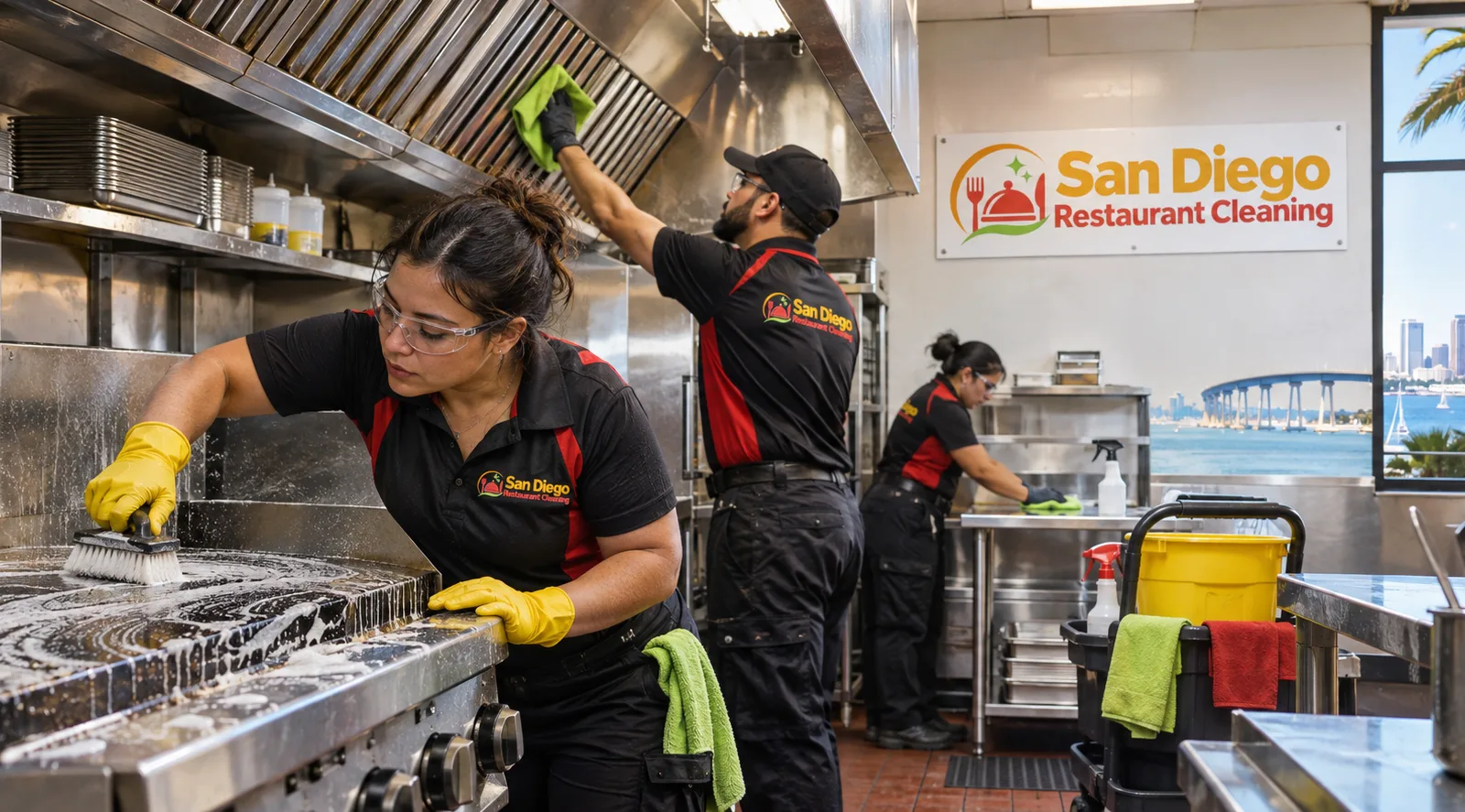
Detailed cleaning for commercial kitchens, walk-in coolers, overhead areas, dining spaces, and the hard-to-reach surfaces that routine nightly work can miss.
A restaurant needs more than a quick wipe-down when grease, dust, crumbs, and residue have collected behind equipment or on overhead surfaces. San Diego Restaurant Cleaning provides restaurant deep cleaning services with a written scope based on the layout, operating schedule, access, and condition of the space. The work can cover back-of-house and front-of-house areas without turning every visit into the same generic checklist.
Our crew focuses on the details that take extra time during normal closing duties: equipment exteriors, walls, shelving, floor edges, corners, baseboards, accessible areas behind movable equipment, and high surfaces. We identify what can be safely cleaned in place, what must be moved by restaurant staff or a qualified technician, and which surfaces need a material-specific product.
Working from 3443 India St, Suite 5, our team provides San Diego's local restaurant service for independent restaurants and other food-service operations. The scope is planned around access to the kitchen, cooler, dining room, storage areas, and service corridors so managers know what will be addressed before work begins.
Kitchen deep cleaning targets buildup beyond the reach of routine line cleaning. A typical scope may include stainless steel equipment exteriors, prep tables, backsplashes, washable wall surfaces, shelving, sinks, floor edges, corners, casters, and accessible spaces beneath or behind movable units. Heavy soil may require dwell time, agitation, and repeated passes rather than stronger chemicals alone.
The cleaning method must match the surface. Stainless steel should be worked with the grain to limit visible scratching. Painted walls, quarry tile, sealed flooring, plastics, and rubber gaskets respond differently to degreasers and agitation. Product labels, dilution instructions, and required contact times guide the work. Test spots are useful when a finish or coating is uncertain.
A deep clean does not replace hood and duct service, pest control, equipment repair, grease-trap pumping, or fire-suppression maintenance. Those jobs require their own providers and access procedures. Defining those boundaries in advance keeps the restaurant detailed cleaning scope practical and prevents assumptions during the job.
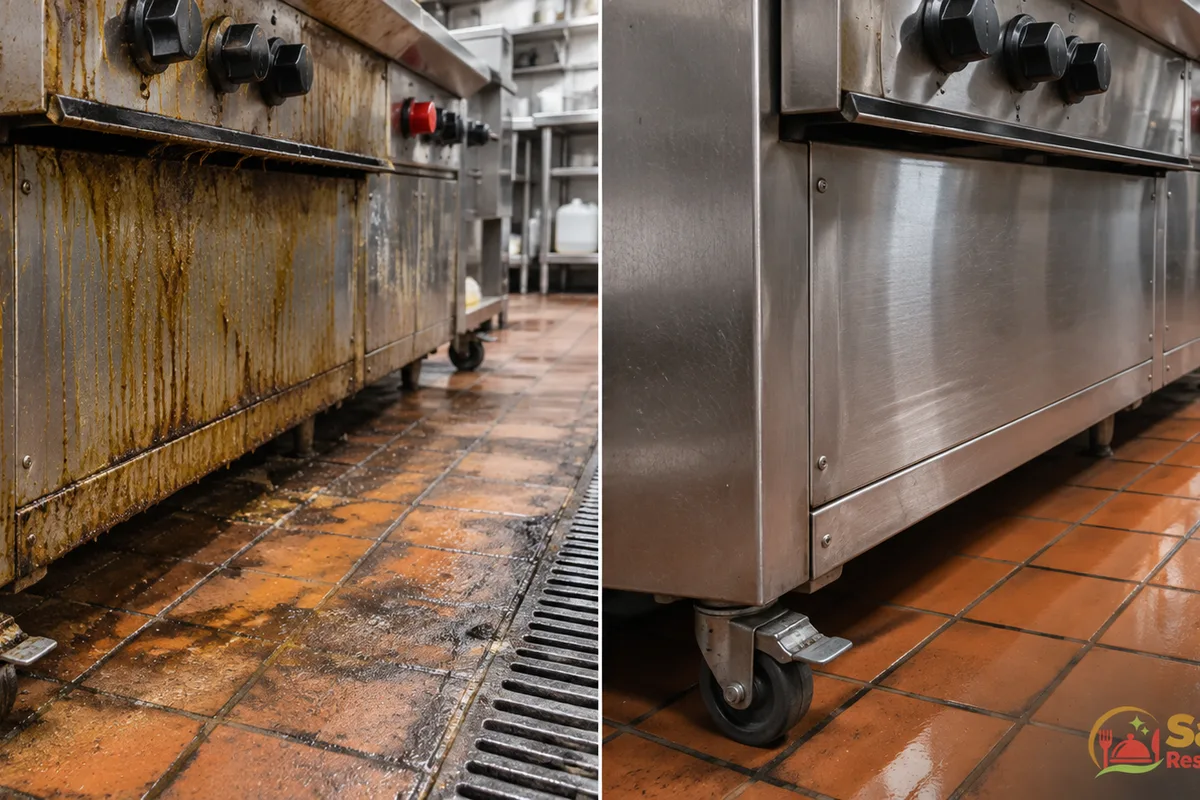
Detailed cleaning for prep surfaces, equipment exteriors, backsplashes, shelving, sinks, washable walls, floor perimeters, and accessible spaces around movable equipment.
Cleaning for empty or prepared shelving, walls, floors, door surfaces, handles, and accessible gasket areas. Food handling and temperature planning are coordinated with management.
Removal of settled dust from accessible ledges, pipes, vents, light exteriors, beams, and other overhead surfaces using controlled methods suited to occupied food-service spaces.
Detailed attention to baseboards, chair and table bases, ledges, partitions, floor edges, service stations, and other touchpoints that influence the appearance of the guest area.
Cleaning around accessible shelving, washable walls, doors, floors, corners, and utility-area surfaces after supplies and obstructions have been prepared for access.
A defined deep clean before an opening, after approved maintenance work, during a planned closure, or when a neglected area needs to be brought back into the regular cleaning rotation.
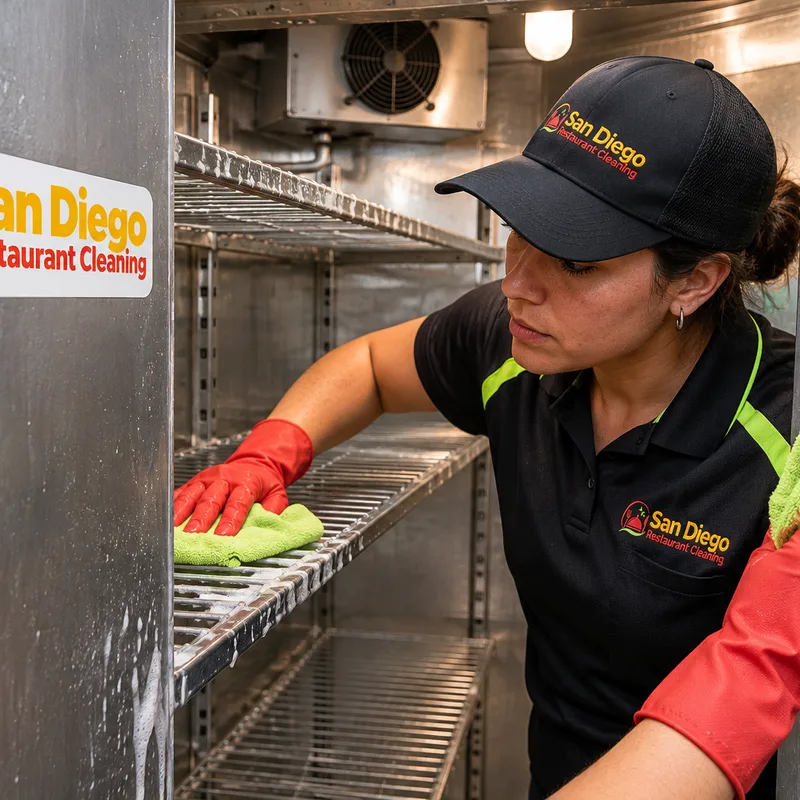
Walk-in cooler cleaning starts with food protection and access. Restaurant management should decide where products will be held, which shelves can be emptied, and whether the unit can remain in operation during the work. Cleaners should not move uncovered food through a dirty work zone or block evaporator airflow with stored items.
The scope may include shelving, walls, floors, door surfaces, handles, and accessible gasket channels. Standing water should be controlled, and electrical components, fan assemblies, sensors, and refrigeration equipment should not be sprayed. Ice buildup, damaged seals, active leaks, corrosion, or mechanical problems need qualified refrigeration service rather than additional scrubbing.
Coastal air and year-round restaurant activity can contribute to recurring soil on entries, exterior-facing surfaces, and frequently opened cooler doors. In Little Italy, compact restaurant footprints can also make staging space limited. Hillcrest restaurants may need work coordinated around evening service, while Gaslamp Quarter operations often need careful loading and access planning. In each case, the useful local detail is operational: when the crew can enter, where equipment can be staged, and how cleaned areas will be protected before service resumes.
High dusting removes settled material from accessible overhead surfaces such as ledges, exposed pipes, beam tops, vent exteriors, light exteriors, and wall caps. It is especially useful in dining rooms with open ceilings and in kitchens where airborne grease can make ordinary dust adhere to surfaces.
The area beneath the work should be cleared or protected before cleaning begins. Food, utensils, prep equipment, and open containers cannot remain exposed while overhead dust is disturbed. Depending on the surface and soil, the crew may use extension tools, HEPA-filtered vacuum equipment, damp wiping, or degreasing. Dry dusting alone can redistribute fine material.
Access determines what can be completed safely. The crew needs stable floor space and appropriate equipment for the working height. Surfaces near energized equipment, fire-suppression components, fragile fixtures, or inaccessible structural areas may require coordination with another trade. High dusting in San Diego restaurants is best scheduled before lower surfaces and floors are cleaned, so dislodged residue is removed during the final passes.
We discuss the kitchen layout, cooler access, dining areas, overhead surfaces, operating hours, known buildup, and any equipment or materials that need special handling.
The scope identifies included areas, exclusions, access requirements, preparation duties, and the expected work window. Photos or an on-site review may be needed for an accurate plan.
Restaurant staff secure food, dishes, utensils, chemicals, personal items, and sensitive equipment. The crew confirms utilities, entry arrangements, staging space, and surfaces that must remain untouched.
Work generally proceeds from overhead surfaces to equipment and walls, then to lower details and floors. Products are selected for the soil and material, with dwell time and agitation used as appropriate.
The completed areas are checked against the agreed scope. Any inaccessible surface, damaged finish, mechanical concern, or condition outside the cleaning scope is documented for management.
A useful proposal should say what will be cleaned, how access will be handled, and what is excluded. Ask whether the company has experience with commercial kitchens, walk-in coolers, open ceilings, and the specific materials in your facility. Confirm who moves equipment, who protects food and smallwares, and whether water, power, floor drains, or loading access are needed.
Timing matters as much as the checklist. North Park restaurants with active street-facing dining areas may need work arranged outside guest hours. Restaurants near India Street and Little Italy can have limited loading or staging room, so the arrival plan should be settled before the crew reaches the property. Downtown and Gaslamp Quarter locations may also require building access coordination. These details affect crew time and what can be completed safely in one visit.
Be cautious with a quote based only on square footage. Two kitchens of similar size can have very different grease levels, equipment density, ceiling heights, cooler shelving, and access constraints. Professional restaurant deep cleaning should be priced from the actual scope and condition, not a broad promise to clean everything.
Get a written cleaning scope built around your kitchen layout, cooler access, overhead areas, operating hours, and current level of buildup.
Call for a Free QuoteReview common questions about pricing, scheduling, cooler preparation, service boundaries, timing, and site access.
Restaurant deep cleaning is priced by labor, condition, access, and scope rather than square footage alone. A compact kitchen with light buildup differs greatly from a grease-heavy facility with dense equipment, high ceilings, a walk-in cooler, and restricted staging. After the areas and preparation needs are reviewed, San Diego Restaurant Cleaning can provide a written scope and job-specific price.
Yes, work can be planned around operating hours when crew access, utilities, security, and the required completion window are confirmed in advance. Restaurants in areas such as Hillcrest, North Park, Little Italy, and the Gaslamp Quarter may have different building-entry, loading, noise, or parking constraints, so those details should be settled during scheduling.
Food should be removed or fully protected according to a plan approved by restaurant management before cooler surfaces are cleaned. The amount of preparation depends on whether shelving, walls, floors, gaskets, or the entire interior are included. Management also remains responsible for safe food temperatures and deciding where products are held during the work.
No, general kitchen deep cleaning should not be assumed to include hood ducts, rooftop exhaust components, or fire-suppression systems. Those systems require qualified providers and separate procedures. Accessible hood exteriors may be included only when they are clearly listed in the written scope and can be cleaned without disturbing protected components.
A targeted area may take several hours, while a larger kitchen, cooler, dining room, and high-dusting scope may require a full work period or multiple visits. Equipment density, grease level, ceiling height, water access, drying needs, and the amount of preparation all affect timing. The expected work window is set after the facility and priorities are reviewed.
Remove or protect food, dishes, utensils, loose supplies, paperwork, and personal items from the agreed work areas. Staff should identify sensitive equipment, arrange entry, provide approved utility access, and move items assigned to the restaurant in the scope. Clear preparation is especially important in compact San Diego kitchens where staging room is limited.
Tell us which areas need attention, when the facility is available, and what buildup or access concerns you have. We will help define a practical scope before the work is scheduled.