
Dining Areas
Floors, accessible hard surfaces, entry glass, ledges, booth edges, and agreed service stations are cleaned after guests and staff leave.
Serving San Diego, California & surrounding areas
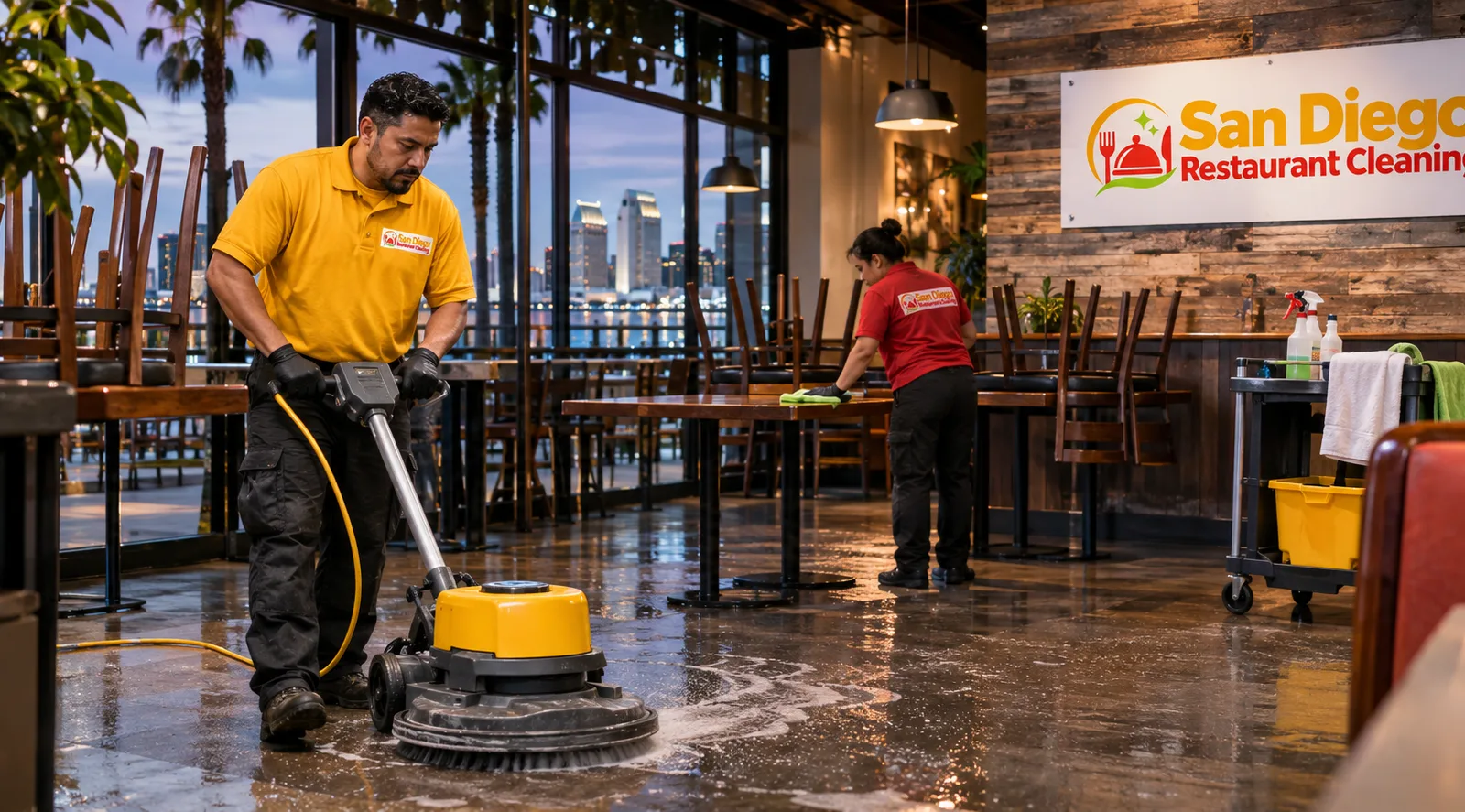
Start each service day with a clean kitchen, dining room, and restroom under a recurring scope built around your closing routine.
Overnight Restaurant Cleaning gives your staff a dependable reset between closing and the next shift. San Diego Restaurant Cleaning coordinates nightly work around your operating hours, alarm procedures, access instructions, and opening deadline. The written scope can cover front-of-house floors, dining surfaces, service stations, restrooms, and agreed kitchen areas.
After service, a professional restaurant company in San Diego, CA builds the work around the conditions crews actually face: food debris under equipment, grease tracked onto floors, full waste containers, fingerprints on entry glass, and restrooms that need cleaning and restocking. Our supervisors can use checklists and documented priorities so recurring tasks are completed in a consistent order.
Restaurant night cleaning is especially useful when daytime work would interfere with guests, deliveries, or food preparation. A recurring schedule also gives managers a clear way to report concerns and adjust priorities when operating hours, floor layouts, or service volume change.
A practical nightly scope separates kitchen work from front-of-house and restroom work. In dining areas, crews may wipe approved hard surfaces, clean entry glass, vacuum carpet, dust-mop or sweep hard floors, and wet-mop with the product and dilution appropriate for the flooring. Chair bases, booth edges, corners, and spaces beneath movable furniture can be included rather than treated as occasional extras.
Kitchen cleaning is defined carefully because each restaurant assigns responsibilities differently. Typical janitorial tasks may include sweeping and mopping accessible floors, cleaning floor edges, wiping exterior surfaces, removing waste, and cleaning accessible areas around movable items. Cooking equipment interiors, exhaust systems, ducts, and other specialized work should be identified separately instead of assumed to be part of a standard nightly visit.
High-touch points such as door handles, push plates, railings, and restroom fixtures can be addressed with an appropriate disinfectant. Cleaning removes soil first; disinfection follows the product label, including the stated contact or dwell time. That distinction matters because spraying and immediately wiping a disinfectant may not meet its labeled directions.
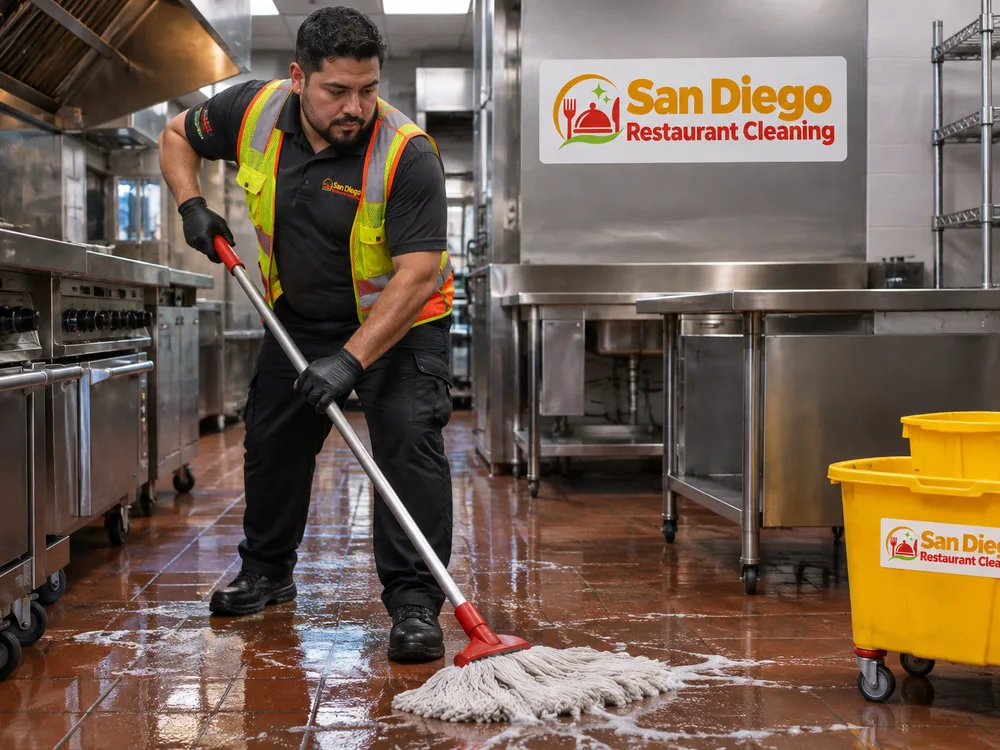
Floors, accessible hard surfaces, entry glass, ledges, booth edges, and agreed service stations are cleaned after guests and staff leave.
Accessible floors, exterior surfaces, floor edges, waste containers, and other written janitorial tasks are handled without confusing routine cleaning with specialized equipment service.
Toilets, urinals, sinks, mirrors, partitions, dispensers, touchpoints, and floors receive a defined cleaning routine. Consumables can be restocked from supplies kept on the premises.
Interior waste is collected, liners are replaced as specified, and bags are moved to the restaurant's designated disposal location.
Baseboards, floor edges, vents, chair legs, and other detail items can rotate through the schedule instead of overloading every nightly visit.
The final walkthrough can cover floors, restrooms, secured doors, lights, and any location-specific closing instructions included in the service plan.
We review the dining room, kitchen access, restrooms, flooring, waste route, storage areas, and any surfaces that need special handling. The walkthrough also identifies tasks your closing staff will finish before cleaners arrive.
Each area receives clear tasks and frequencies. Nightly, weekly, and periodic items are separated so managers know what should be completed on any given visit.
Key, lockbox, alarm, parking, and entry instructions are documented along with the earliest start time and required completion time. Secure access is especially important for late-night work.
The crew follows the approved sequence, and management has a direct method for reporting an issue or requesting a scope change. Early feedback helps align expectations with the restaurant's actual closing conditions.
Seasonal hours, private events, menu changes, and altered floor plans can affect cleaning needs. The schedule and task list can be revised when the operation changes.
Restaurant operations vary sharply by district. In the Gaslamp Quarter, late closing times and dense nightlife can require narrow service windows and carefully coordinated building access. Little Italy restaurants often operate near active dining corridors where entry glass, tracked debris, and front-of-house floors need close attention after evening service.
North Park has many restaurants and bars along walkable commercial streets, so crews may need to coordinate around late staff departures and limited curb access. In La Jolla, restaurant locations range across village commercial areas and coastal dining settings, making precise keys, alarms, parking instructions, and completion times essential. Liberty Station restaurants may also have location-specific access and waste routes within the larger property.
San Diego's dry periods can bring dust and grit through entrances, while rainy days increase tracked soil and slip concerns. Entry mats, frequent soil removal, and correct floor chemistry help limit residue. Coastal air can also leave marks on exposed entry glass, which is why local scopes should be based on actual conditions rather than a generic checklist.
A restaurant janitorial company should define boundaries before service starts. The proposal should identify rooms, tasks, frequencies, exclusions, consumable responsibilities, access arrangements, and the process for reporting a missed item. Broad phrases such as “clean the kitchen” are open to conflicting interpretations. A task such as “sweep and wet-mop accessible kitchen flooring after loose debris is removed” is easier to inspect.
Chemical handling also matters. Products should be used according to their labels, and food-contact surfaces require methods appropriate to the surface and restaurant procedure. Color-coded cloths or tools can reduce cross-use between restrooms, dining areas, and kitchen support spaces. Safety Data Sheets should be available for workplace chemicals, and containers should remain properly labeled.
For restaurant janitorial services in San Diego, dependable arrival and completion times are as important as the task list. Managers need the building secured, alarms handled correctly, and the restaurant ready before opening staff arrive. A clear communication process turns a cleaning complaint into a specific correction instead of a recurring frustration.
Get a written nightly scope based on your restaurant's floor plan, closing schedule, restroom needs, and opening deadline.
Call for a Free QuoteReview practical details about pricing, late-night access, kitchen scope, restroom service, supplies, and recurring schedules.
Pricing is usually based on labor time and frequency rather than a single flat market rate. Square footage, number of restrooms, floor types, kitchen soil, closing condition, access, waste handling, and nightly versus limited-week scheduling all affect the proposal. A walkthrough at the restaurant is the soundest way to confirm an exact recurring price and written scope.
Yes, service can be planned for a late-night window when enough time remains to finish before opening staff arrive. Restaurants in late-closing districts such as the Gaslamp Quarter need especially clear entry, alarm, parking, and lock-up instructions. The schedule should also allow for guests or closing employees who remain past the posted closing time.
It can include agreed janitorial work in accessible kitchen areas, but the exact tasks must be written into the scope. Common items include sweeping, floor-edge cleaning, wet-mopping, exterior wiping, and waste removal. Cooking equipment interiors, hood and duct cleaning, grease-trap service, and other specialized tasks should be confirmed separately.
A typical restroom scope covers toilets or urinals, sinks, counters, mirrors, partitions, dispensers, touchpoints, waste, and floors. Consumables may be restocked from the restaurant's on-site inventory if that responsibility is included. The crew should clean visible soil before applying disinfectant and follow the product's labeled contact time.
Yes, recurring cleaning can be arranged for selected nights or every operating day, subject to crew availability and the agreed workload. The best schedule depends on service volume, closing duties, floor conditions, and how quickly restrooms and dining areas accumulate soil. High-volume nights may require a different scope than quieter shifts.
The start date depends on walkthrough availability, scope approval, staffing, and completion of access instructions. Restaurants with alarms, controlled building entry, or property-specific waste routes may need extra coordination before the first visit. Confirming those details early helps the initial overnight shift run correctly.
Supply responsibility is decided during the proposal process and should appear in writing. A restaurant may keep paper goods and soap on the premises while the cleaning company provides routine chemicals and tools, or another arrangement may be agreed. Product compatibility matters for stone, sealed concrete, tile, wood, and specialty flooring.
Tell San Diego Restaurant Cleaning about your hours, floor plan, kitchen support needs, and restrooms. We will help define a recurring scope that fits the time between closing and the next shift.